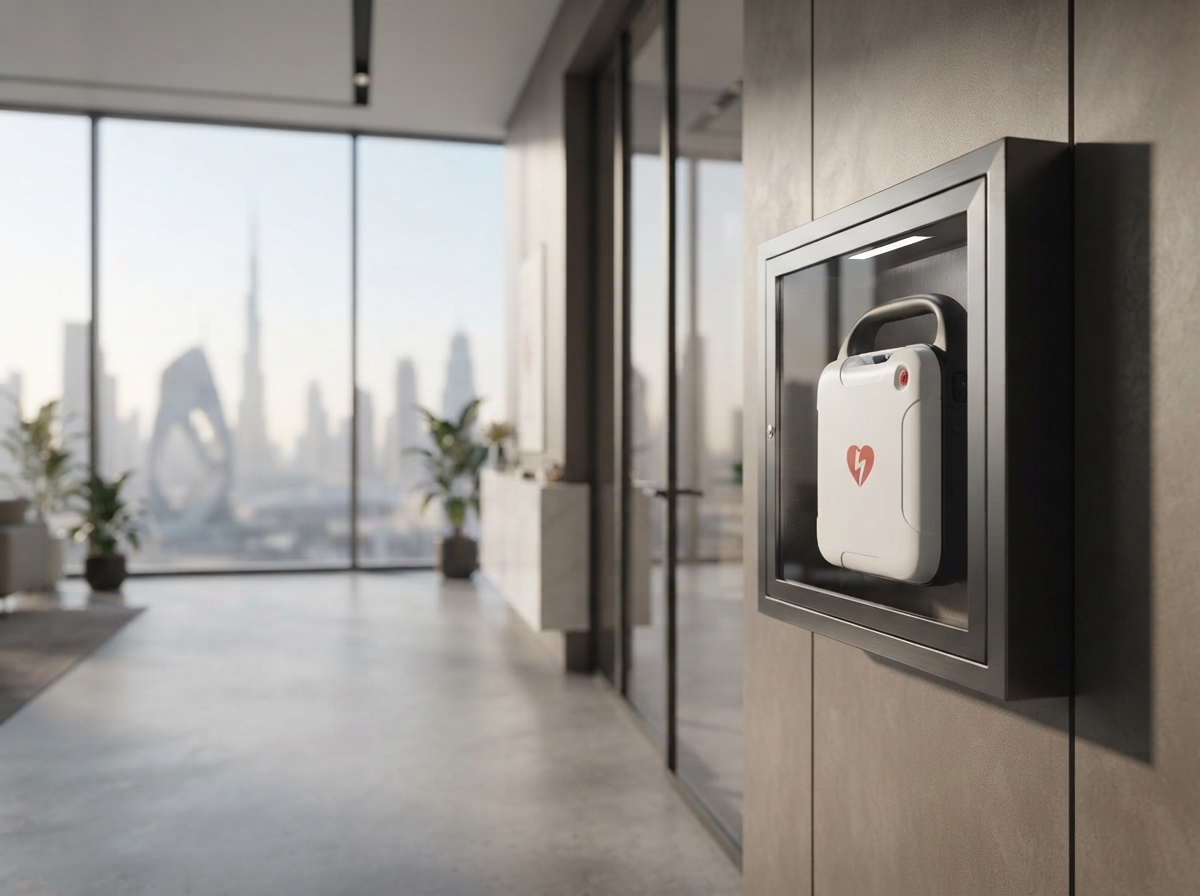
Most people never think about what an AED does when it's simply sitting in its cabinet, but modern devices quietly run automated self-tests on a regular schedule without any human involvement.
What the Device Actually Checks
Automated self-tests typically verify battery charge level, internal circuit function, and pad connector integrity, confirming the device remains genuinely ready without anyone opening the case.
Frequency Varies by Model
Some devices run brief checks daily, with more thorough tests weekly or monthly, depending on the specific manufacturer's design.
The Status Indicator Reflects These Results
The simple status light or display covered in our battery indicator guide directly reflects the outcome of these automated tests — a green light means the device passed its most recent check.
Why Manual Checks Still Matter Despite This
Automated self-tests catch electronic and battery issues but can't verify things like whether the cabinet is accessible, signage is intact, or pads are physically present — human checks remain necessary too.
A Reassuring Layer of Automatic Readiness
Understanding this background process should add genuine confidence that your device is continuously checking itself, complementing rather than replacing your own maintenance routine.
Combine Automated and Human Checks Properly
Our AED Maintenance service ensures both automated self-test results and physical human inspection are properly tracked. Get in touch to discuss your program.
Combine Automated and Human Checks Properly
Heart First Response supplies, installs, maintains and trains organizations on AEDs across Dubai, United Arab Emirates and the wider Gulf region. Call us on +971 52 1746500 or visit heartfirstaed.com to get started.