Few environments combine the volume, diversity, and stress levels of an airport or major transit hub. Long walks, tight connections, jet lag, and travel-related anxiety all place genuine additional strain on travelers — some of whom are already managing underlying health conditions.
Constant, High-Volume Foot Traffic
A major transit hub can see more people pass through in a single day than most office buildings see in a month. That volume alone makes even a statistically rare event a realistic annual occurrence.
Travel Itself Adds Physical Stress
Long-haul flights, dehydration, sitting for extended periods, and the general physical stress of travel are all recognized contributors to cardiac risk — particularly for older or already vulnerable travelers.
Distance Changes Everything
Large terminals and stations mean the nearest AED could realistically be several minutes' walk away without deliberate, distributed placement — a gap that directly affects survival odds given how time-critical defibrillation is.
Staff Across Every Function Need Awareness
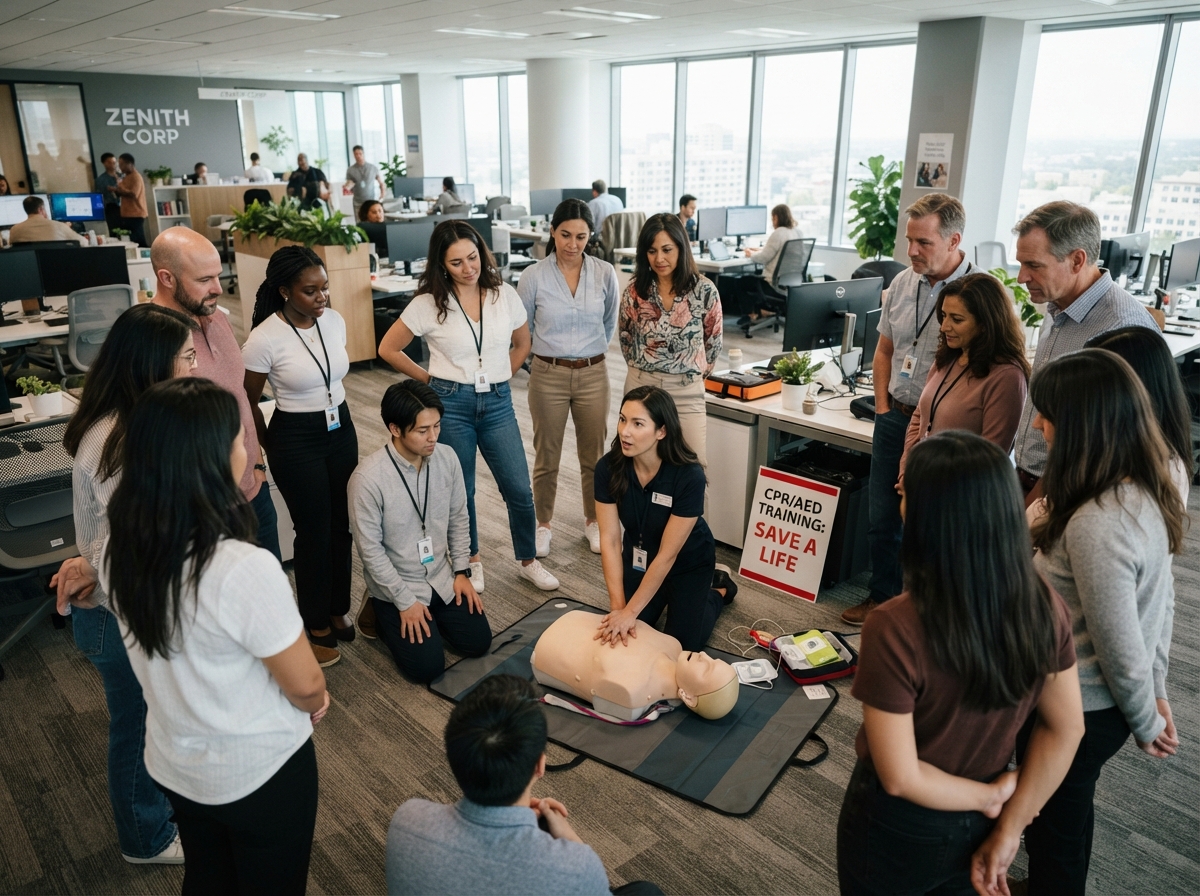
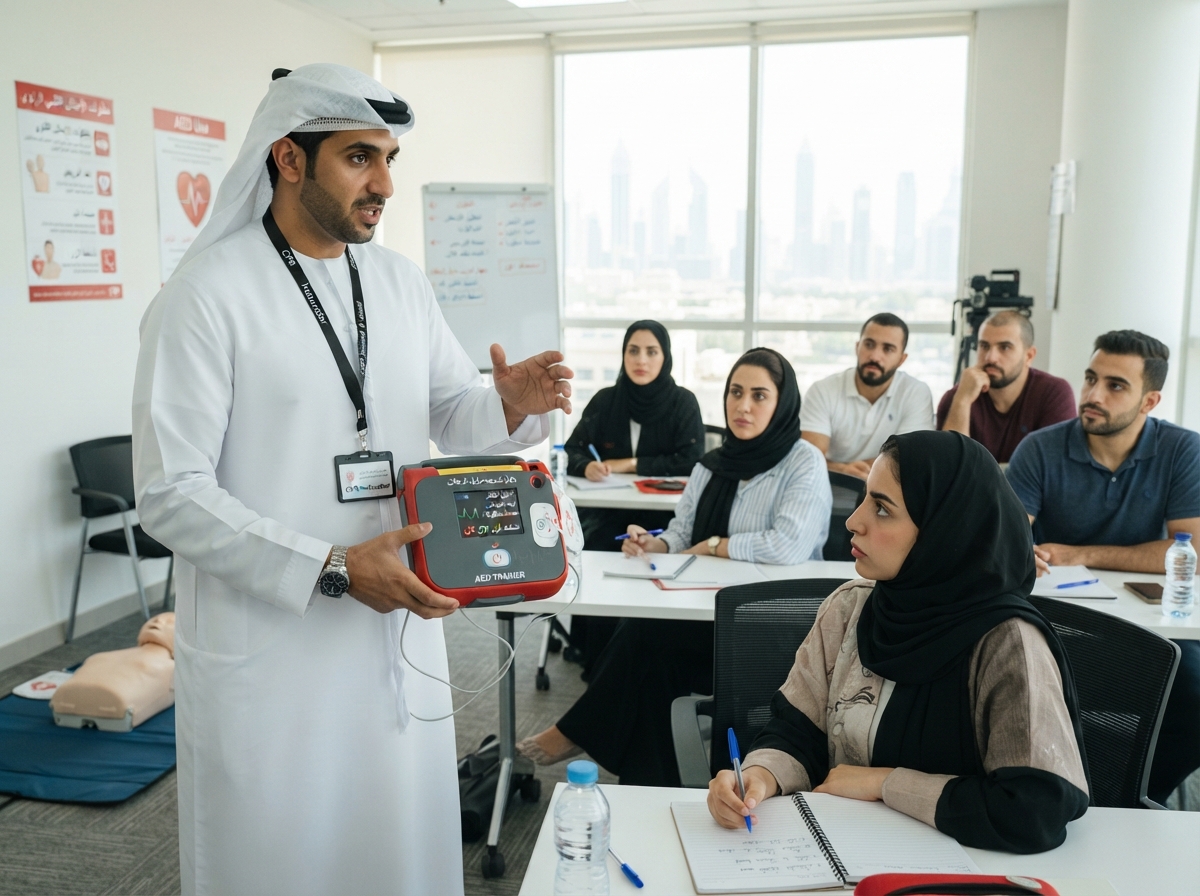
Security, retail staff, cleaning crews, and information desk personnel are often the ones actually present when an emergency happens — not just designated medical staff. Broad AED Training across every role, not just a small first-aid team, matters enormously in this setting.
Multilingual, International Visitors
Transit hubs see visitors from every part of the world, reinforcing the value of clear, universally recognizable signage over text-heavy instructions any single traveler might not understand.
Equip Your Transit Facility
We work with transport and logistics operators across Dubai to design coverage that matches genuinely high-volume, high-transit environments — reach out for a Consultation.
Equip Your Transit Facility Properly
Heart First Response supplies, installs, maintains and trains organizations on AEDs across Dubai, United Arab Emirates and the wider Gulf region. Call us on +971 52 1746500 or visit heartfirstaed.com to get started.