Dubai's co-working scene has grown rapidly, with shared office operators hosting everything from solo freelancers to fast-growing startup teams, often with member turnover happening weekly. This creates a genuinely different emergency preparedness picture than a traditional single-tenant office.
Who's Actually Responsible?
Unlike a standalone office where one company clearly owns building safety, co-working spaces usually have the operator responsible for shared infrastructure — including AED coverage — while member companies come and go without ever formally reviewing what that coverage includes.
Constant Member Turnover
With members changing weekly or monthly, relying on any individual company's staff to know emergency procedures is unrealistic. Operator-led orientation, covering AED location as standard, matters far more here than in a stable single-tenant workplace.
High-Density, Open-Plan Layouts
Open co-working floors often pack more people into less space than traditional offices, meaning cumulative daily occupancy — and therefore risk exposure — can be higher than the square footage alone might suggest.
Diverse Member Demographics
Co-working members range widely in age, fitness level, and health background, especially in spaces that also host corporate teams and community events, not just startup founders.
A Selling Point for Operators
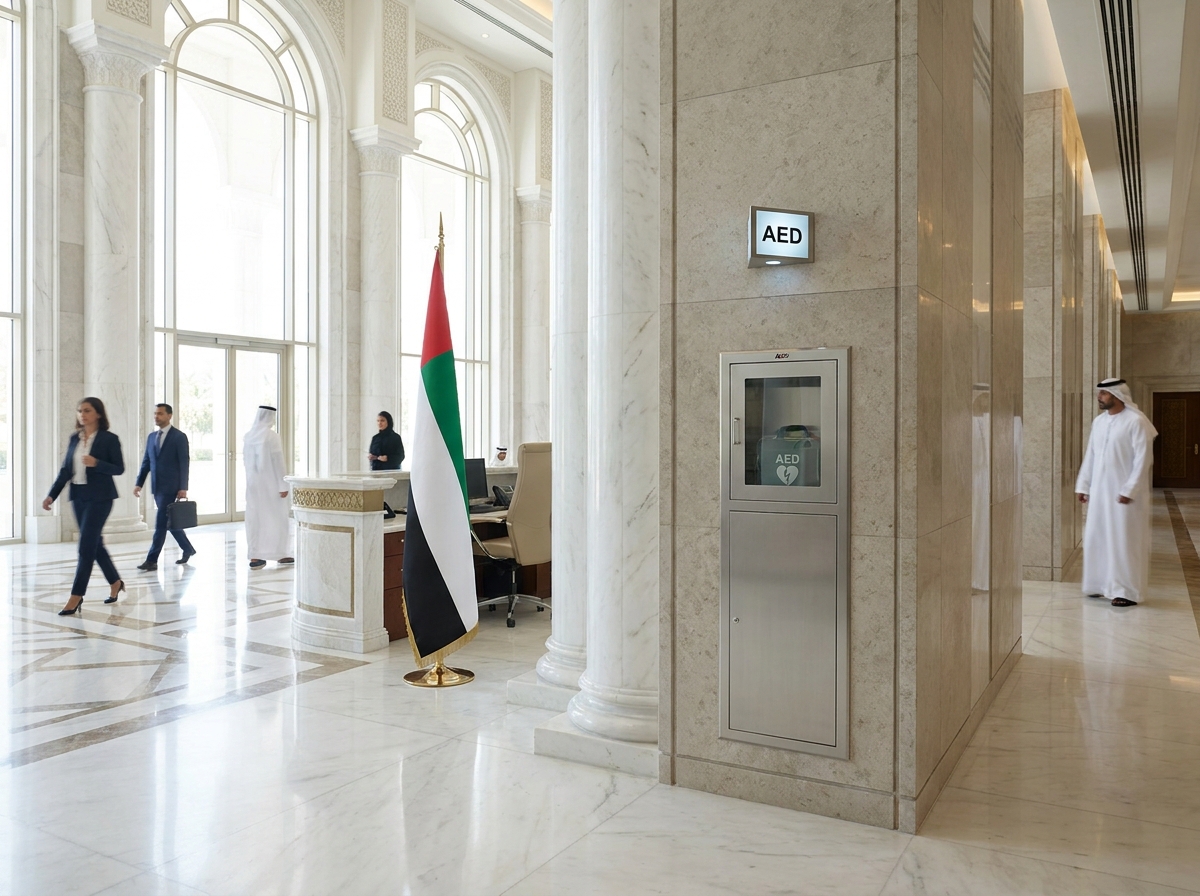
Genuine, visible safety investment — not just fire extinguishers, but an accessible, well-signed AED — is increasingly something serious corporate tenants and members notice when choosing a space.
Equip Your Co-Working Space
If you operate a shared office space in Dubai, we can help design coverage and a simple orientation process for a constantly rotating member base. Get in touch to discuss your space.
Equip Your Shared Office Space
Heart First Response supplies, installs, maintains and trains organizations on AEDs across Dubai, United Arab Emirates and the wider Gulf region. Call us on +971 52 1746500 or visit heartfirstaed.com to get started.