Walk into almost any commercial building and you'll find fire extinguishers mounted at regular intervals, checked on a schedule, and never seriously questioned as a cost. An AED, statistically just as important, is treated very differently. Why?
Both Address a Low-Probability, High-Severity Risk
Fires and cardiac arrests share a similar risk profile — both are relatively rare on any given day, but genuinely catastrophic without the right equipment immediately on hand. Neither risk announces itself in advance.
Fire Safety Became Standard Through Culture, Not Just Regulation
Fire extinguishers are ubiquitous today largely because fire safety became deeply embedded in building culture over decades, reinforced by clear signage, mandatory checks, and public awareness — not because every single building type was individually mandated.
AED Readiness Is Following the Same Path, Just Later
Public access defibrillation is roughly where fire safety culture was several decades ago — genuinely important, increasingly expected, but not yet as automatic in every building owner's mind.
The Practical Similarities Are Real
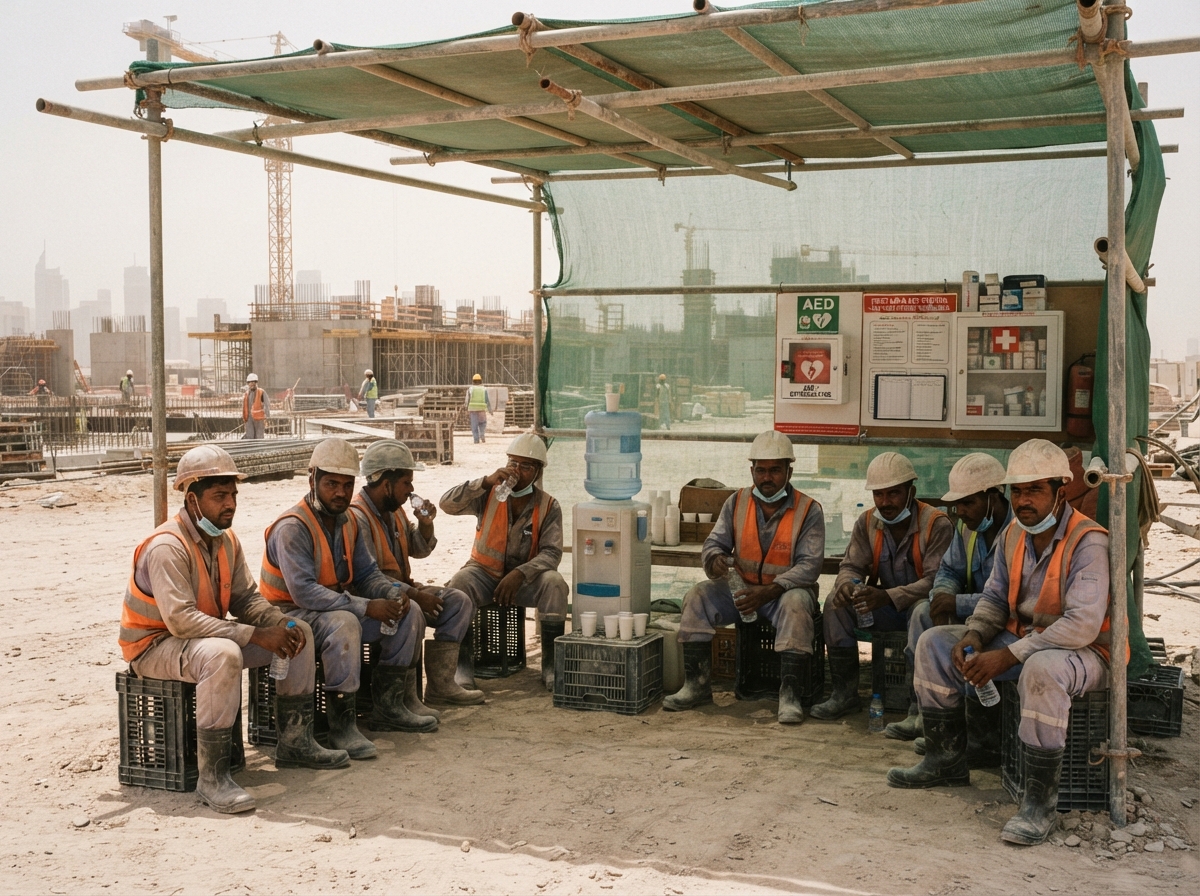
Both require a fixed, visible location, both need periodic inspection to remain functional, and both are only useful if the people nearby know where to find them and how to use them.
Treat Them as Equally Non-Negotiable
A building with excellent fire safety but no AED has only solved half of its serious emergency preparedness picture. The other half deserves the same default status.
Close the Gap in Your Building
If your fire safety is well established but your cardiac emergency readiness hasn't caught up, that's a gap worth closing. Get in touch for a Consultation.
Close the Gap in Your Building
Heart First Response supplies, installs, maintains and trains organizations on AEDs across Dubai, United Arab Emirates and the wider Gulf region. Call us on +971 52 1746500 or visit heartfirstaed.com to get started.