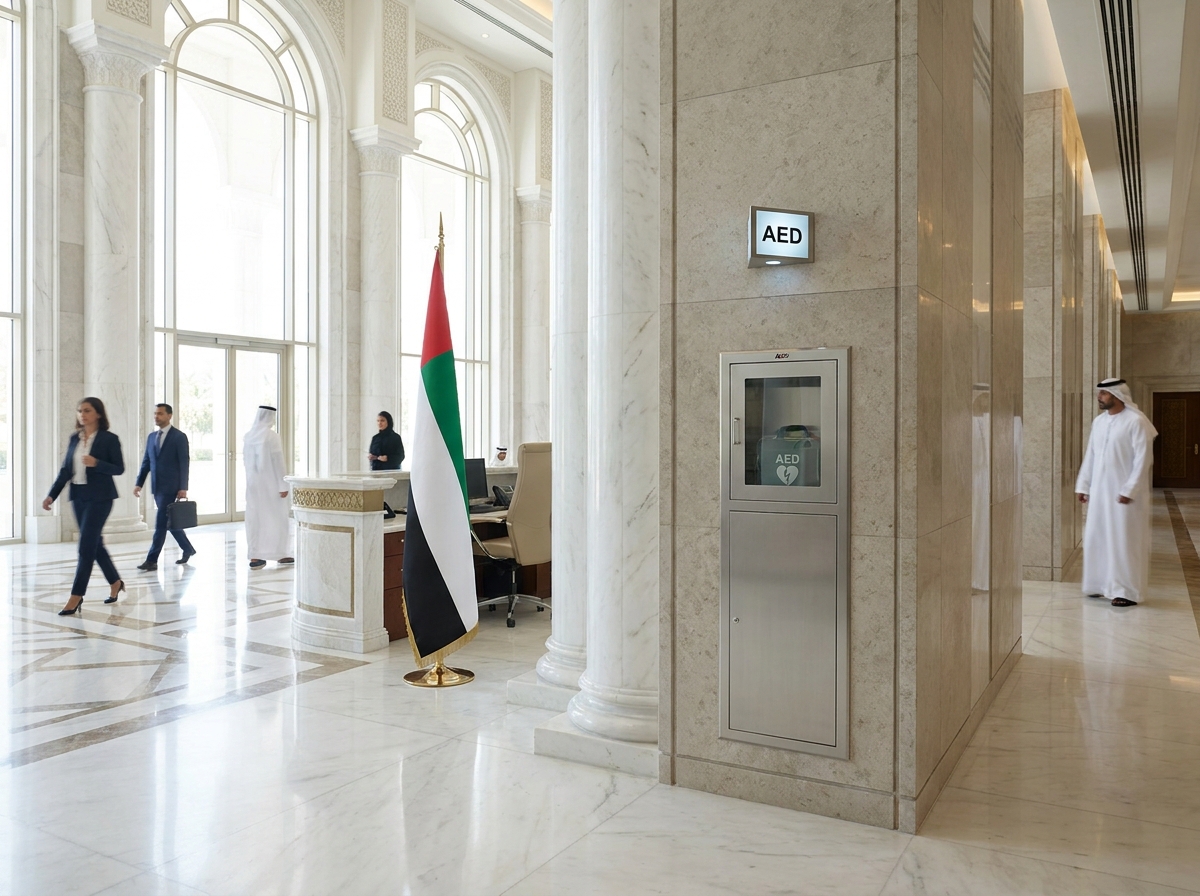
Beyond the AED device itself, the cabinet housing it involves a real decision: open access, keyed/locked, or alarmed. Each option carries genuine trade-offs worth understanding before you choose.
Open Access Cabinets
The simplest option — no lock, no barrier, immediate retrieval. Best suited to controlled environments like offices where tampering risk is low and speed of access is the top priority.
Alarmed Cabinets
An audible alarm sounds when the cabinet is opened, alerting nearby staff that the device is in use — useful in larger or public-facing buildings where you want immediate awareness that an emergency may be underway, without restricting access itself.
Locked or Keyed Cabinets
Access requires a key or code, typically reserved for high-tamper-risk public locations. The clear trade-off is added retrieval time during a genuine emergency — a real cost that should be weighed carefully against the tampering risk being addressed.
Matching Cabinet Type to Environment
Low-risk internal office environments generally favor open or alarmed access. High-traffic public spaces with tampering concerns may lean toward alarmed cabinets specifically, since they preserve fast access while still providing accountability.
Avoid Defaulting to "Locked" Out of Caution
A common mistake is choosing a locked cabinet purely out of general caution, without weighing the real cost of delayed access during an actual emergency — the safer default in most settings is alarmed, not locked.
Get the Right Cabinet for Your Space
Our AED Installation service includes cabinet selection matched to your specific building and risk profile — get in touch to discuss options.
Get the Right Cabinet for Your Space
Heart First Response supplies, installs, maintains and trains organizations on AEDs across Dubai, United Arab Emirates and the wider Gulf region. Call us on +971 52 1746500 or visit heartfirstaed.com to get started.