Some AEDs include a visual display screen alongside voice guidance, while others rely on voice prompts alone — a genuine design choice worth an honest comparison for your specific team.
What a Display Screen Adds
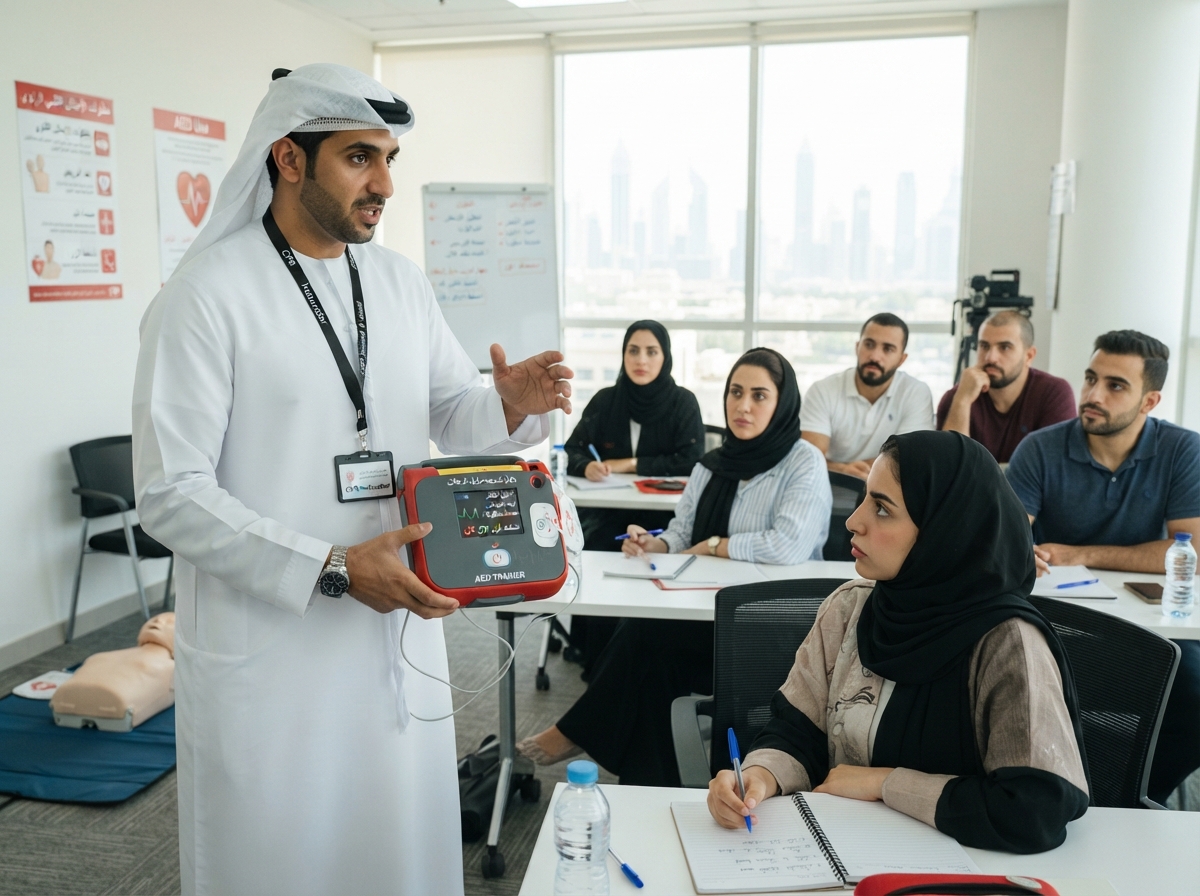
Devices like the Defibtech Lifeline View provide visual step-by-step guidance alongside audio, which can help some users process instructions more easily than voice alone, particularly under stress.
What Voice-Only Devices Offer Instead
Voice-only devices are typically simpler and sometimes more compact, relying entirely on clear audio instructions that work regardless of lighting conditions or where the rescuer is looking.
Consider Your Specific Environment
In genuinely noisy environments — construction sites, industrial floors — a visual display can help reinforce instructions when audio might be harder to hear clearly.
Consider Your Team's Learning Preferences
Teams with a mix of learning styles may benefit from a device offering both visual and audio guidance, rather than relying on a single information channel.
Neither Option Is Objectively Better
Both approaches are clinically effective and widely used — this is genuinely a preference and environment-fit question, not a safety compromise either way.
Discuss What Suits Your Team
We're happy to talk through which approach genuinely suits your team and environment. Get in touch to discuss your options.
Discuss What Suits Your Team
Heart First Response supplies, installs, maintains and trains organizations on AEDs across Dubai, United Arab Emirates and the wider Gulf region. Call us on +971 52 1746500 or visit heartfirstaed.com to get started.