Trauma medicine often references a golden hour for getting a critically injured patient to definitive care — cardiac arrest works on a genuinely different, dramatically shorter timescale worth understanding clearly.
Minutes, Not an Hour
Unlike traumatic injury, where an hour framework guides transport decisions, cardiac arrest survival odds change meaningfully within the first few minutes alone, long before any hospital transport begins.
Why This Distinction Matters for Planning
Organizations sometimes reasonably assume that as long as an ambulance arrives within a typical response window, they've done enough — cardiac arrest specifically requires action well before that arrival.
This Is Exactly Why On-Site Response Matters So Much
Given how much survival odds shift within these first few minutes, whoever is already on-site, not emergency services still traveling, genuinely determines the outcome in most cases.
A Different Mindset From General First Aid
General first aid often involves stabilizing a patient until help arrives; cardiac arrest response is itself the definitive treatment during those critical early minutes, not just stabilization.
This Is the Core Argument for Public Access Defibrillation
Understanding this timescale distinction is essentially the entire rationale behind public access AED programs existing at all, rather than relying solely on professional response.
Build Readiness for the Minutes That Matter Most
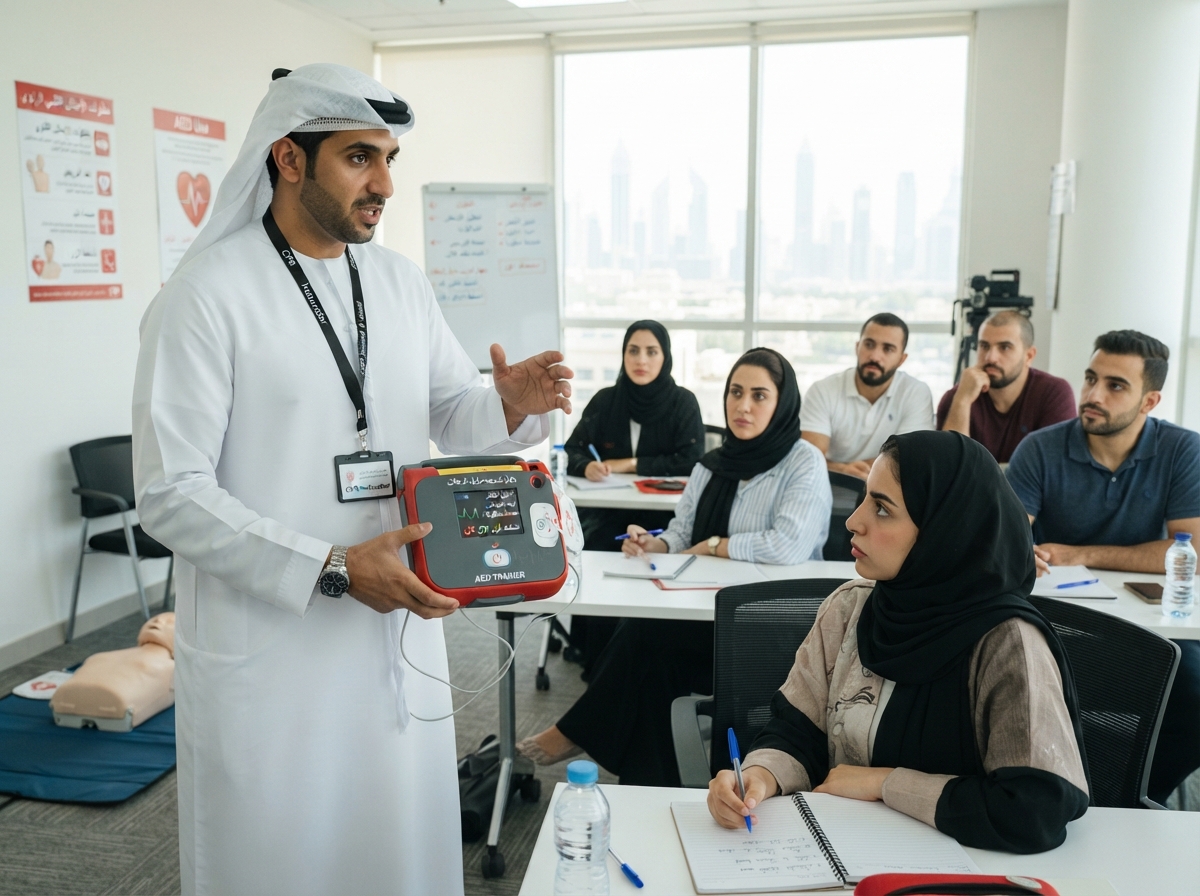
Our AED Training is built entirely around this critical early window. Get in touch to schedule your team.
Build Readiness for the Minutes That Matter Most
Heart First Response supplies, installs, maintains and trains organizations on AEDs across Dubai, United Arab Emirates and the wider Gulf region. Call us on +971 52 1746500 or visit heartfirstaed.com to get started.