"Heart attack" and "cardiac arrest" are frequently used as if they mean the same thing. They don't, and understanding the difference is critical to responding correctly in an emergency.
Heart Attack: A Circulation Problem
A heart attack (myocardial infarction) happens when blood flow to part of the heart muscle is blocked, usually by a clot. The heart is often still beating and the person is usually conscious, at least initially. Common symptoms include chest pain, shortness of breath, and pain radiating to the arm or jaw. A heart attack is a medical emergency, but it does not require an AED.
Cardiac Arrest: An Electrical Problem
Sudden cardiac arrest happens when the heart's electrical system malfunctions, causing it to stop pumping effectively. The person collapses, becomes unresponsive, and stops normal breathing almost immediately. This is the emergency an AED is built for — and it can happen with little to no warning, even in people with no prior heart problems.
Why the Distinction Changes Your Response
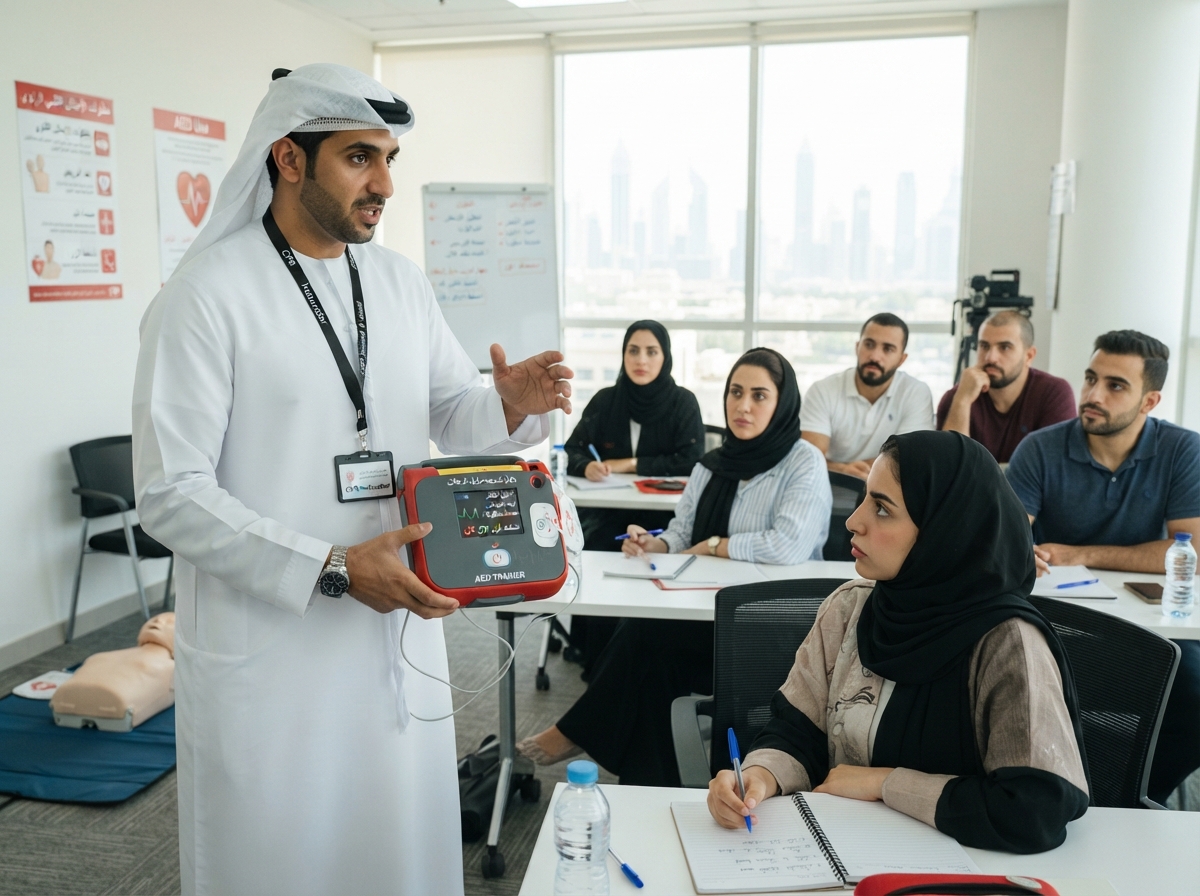
If someone is conscious, breathing, and describing chest pain, you're likely looking at a heart attack — call emergency services and keep them calm and still. If someone suddenly collapses, is unresponsive, and isn't breathing normally, treat it as cardiac arrest: start CPR immediately and send someone for the nearest AED.
One Can Lead to the Other
A heart attack can trigger the electrical disturbance that causes cardiac arrest, which is part of why having an AED accessible in any workplace — regardless of how healthy your staff appear — is a genuine safety investment, not an overcautious one.
Prepare Your Team to Recognize Both Emergencies
Heart First Response supplies, installs, maintains and trains organizations on AEDs across Dubai, United Arab Emirates and the wider Gulf region. Call us on +971 52 1746500 or visit heartfirstaed.com to get started.