Opening an AED case for the first time can feel intimidating simply because the components are unfamiliar. A plain breakdown of what's actually inside demystifies the device considerably.
The Main Unit
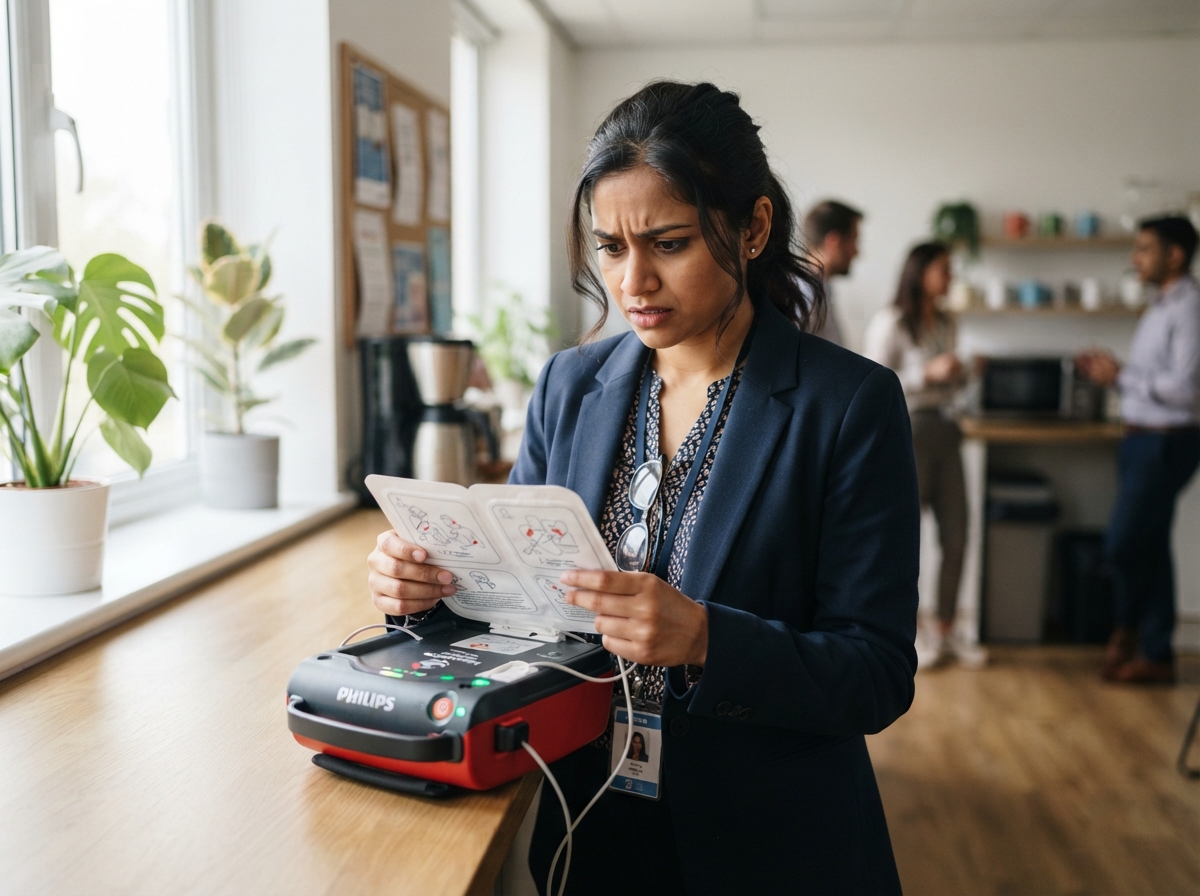
The device body houses the battery, the analysis electronics, and the speaker that delivers voice prompts — this is the "brain" of the system, though it does nothing without the pads attached.
Electrode Pads
Two adhesive pads, pre-connected to the device by a cable, are placed directly on the patient's bare chest. They serve double duty — reading the heart's rhythm and delivering the shock if one is needed.
The Battery
A dedicated, long-shelf-life battery powers the entire device, separate from and lasting considerably longer than typical consumer electronics batteries, though it still has a defined expiry date.
The Status Indicator
A simple light or small display shows whether the device has passed its automatic self-test and is ready for use — the detail worth checking regularly, as covered in our guide to battery indicator lights.
The Carrying Case
Most AEDs come in a protective case, sometimes including a small rescue kit — gloves, a razor for chest hair removal, and a face shield for rescue breaths.
Optional Accessories
Depending on the model, additional accessories may include pediatric pads, a wall-mounting bracket, or connectivity modules for remote status monitoring.
See a Real Device Up Close
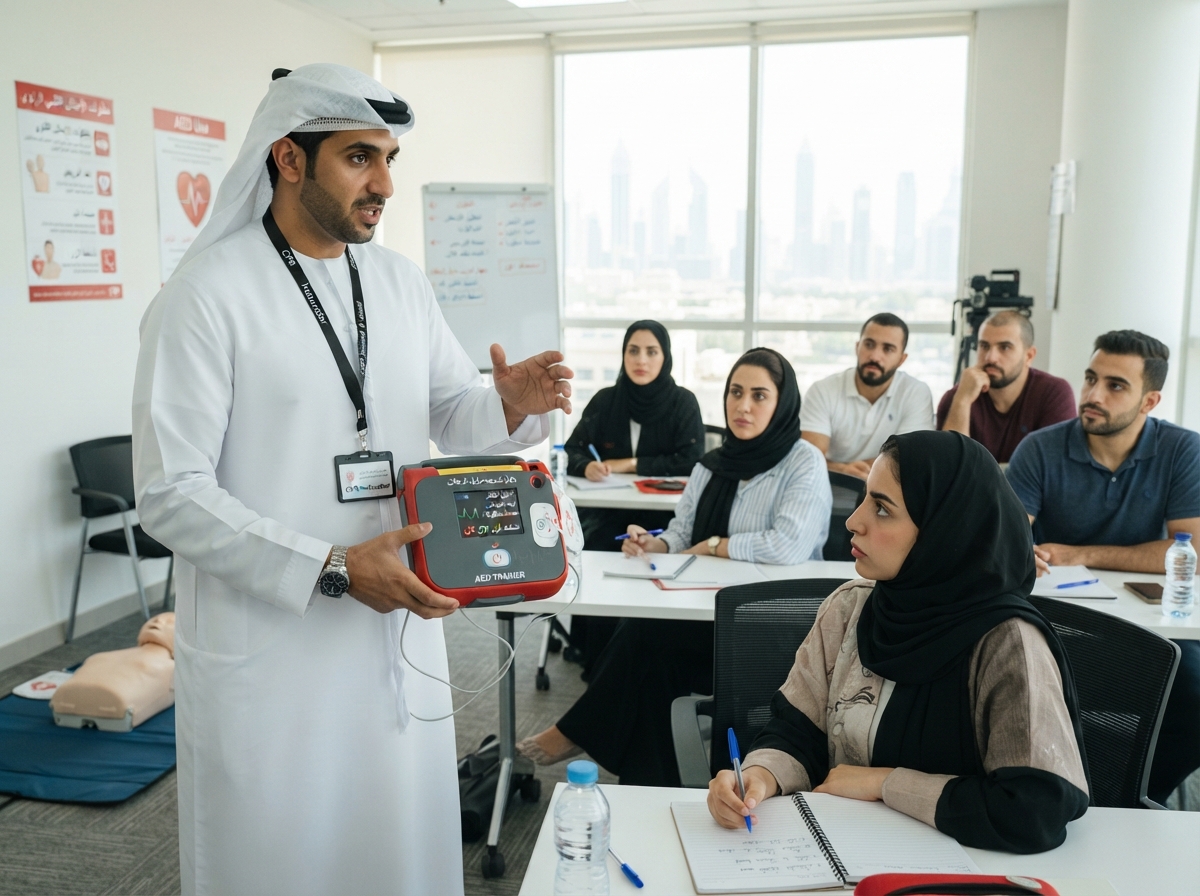
The best way to truly demystify an AED is to see one in person. Book a Free Demonstration and we'll walk you through every component.
See a Real Device Up Close
Heart First Response supplies, installs, maintains and trains organizations on AEDs across Dubai, United Arab Emirates and the wider Gulf region. Call us on +971 52 1746500 or visit heartfirstaed.com to get started.