Buying the right AED is only half the job. Where you install it has a direct impact on how quickly it can actually be used in an emergency.
Visibility First
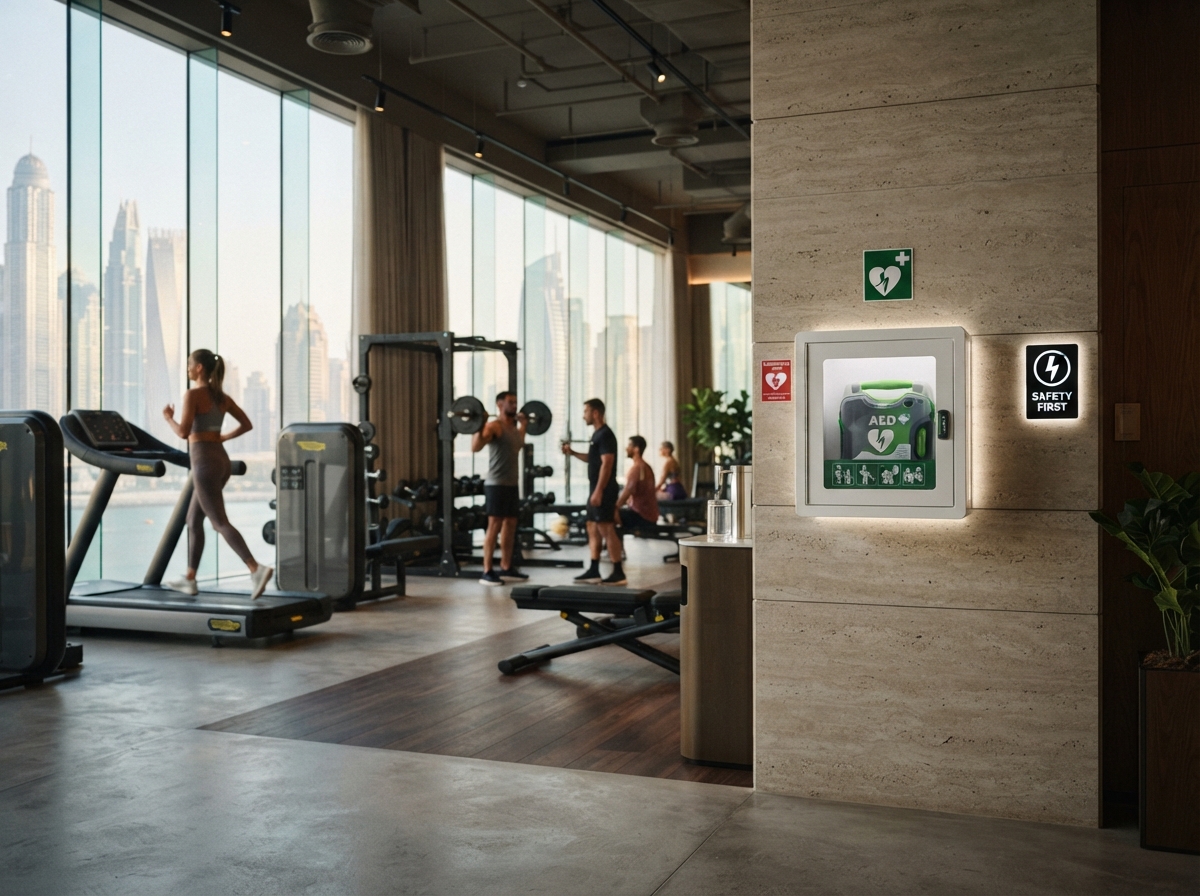
An AED should be immediately visible from common walkways, not tucked inside an office or storage room. Bright, standardized signage — a white AED symbol on a green background — should be visible from multiple directions.
Near, But Not Inside, High-Risk Areas
Placing a unit just outside a gym, cafeteria, or sports court — rather than inside it — keeps the device accessible during an evacuation and protected from heavy physical activity or spills.
Unobstructed and Unlocked
AED cabinets should never be locked in a way that delays access, and the surrounding area should be kept clear of storage, furniture, or equipment that could block quick retrieval.
Reception Areas and Main Entrances
High-traffic entry points are ideal locations, since they're familiar to both staff and visitors and are typically staffed or monitored during operating hours.
Near Elevators — But Consider the Stairs
Elevators cannot be relied on during an emergency response, so ground-floor and stairwell-adjacent placement is often more reliable than an elevator lobby alone on upper floors.
Weatherproofing for Outdoor Locations
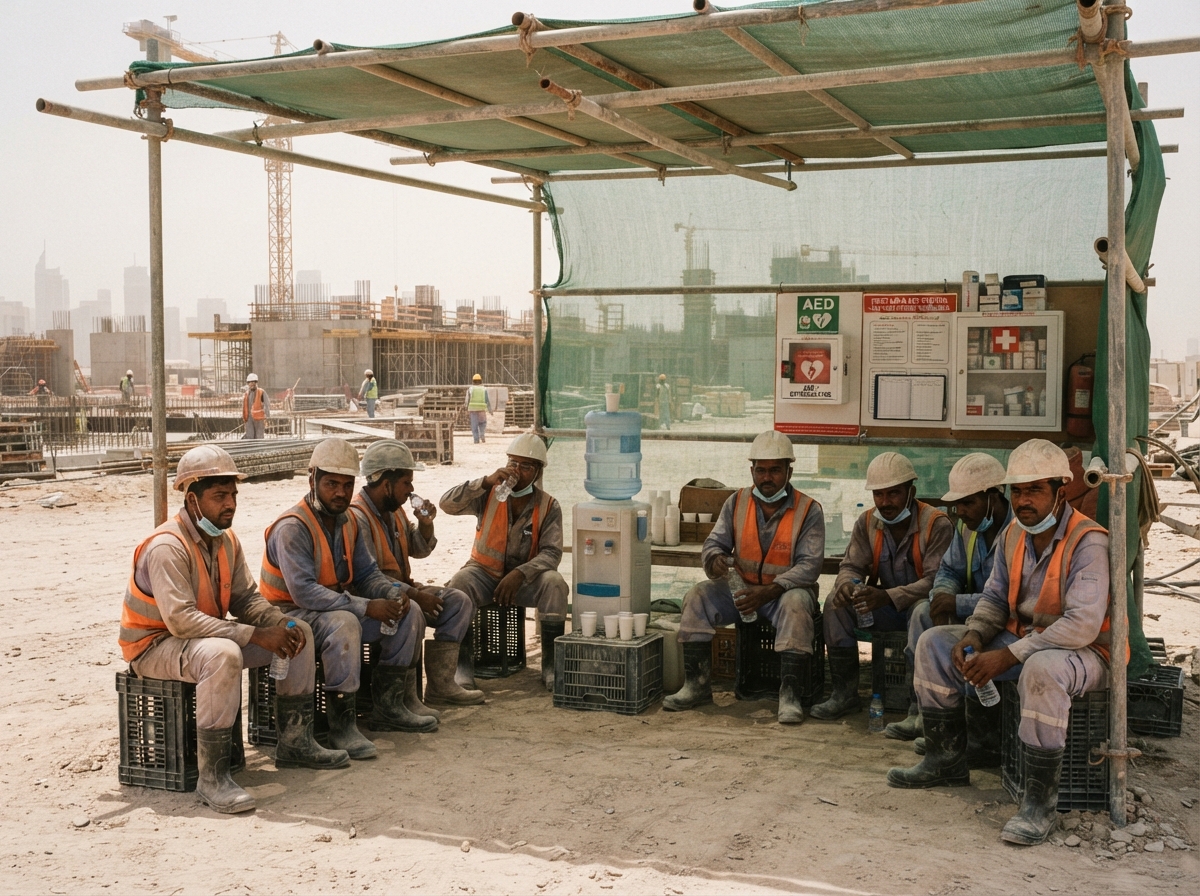
Any unit placed outdoors — at a construction site entrance or sports field, for example — needs a weatherproof cabinet rated for heat and humidity, both of which are significant considerations in the UAE climate.
Get Professional Placement Guidance
Our AED Installation service includes a full site assessment to determine optimal placement for your specific building, not just a generic recommendation.
Get Professional Placement for Your AED
Heart First Response supplies, installs, maintains and trains organizations on AEDs across Dubai, United Arab Emirates and the wider Gulf region. Call us on +971 52 1746500 or visit heartfirstaed.com to get started.