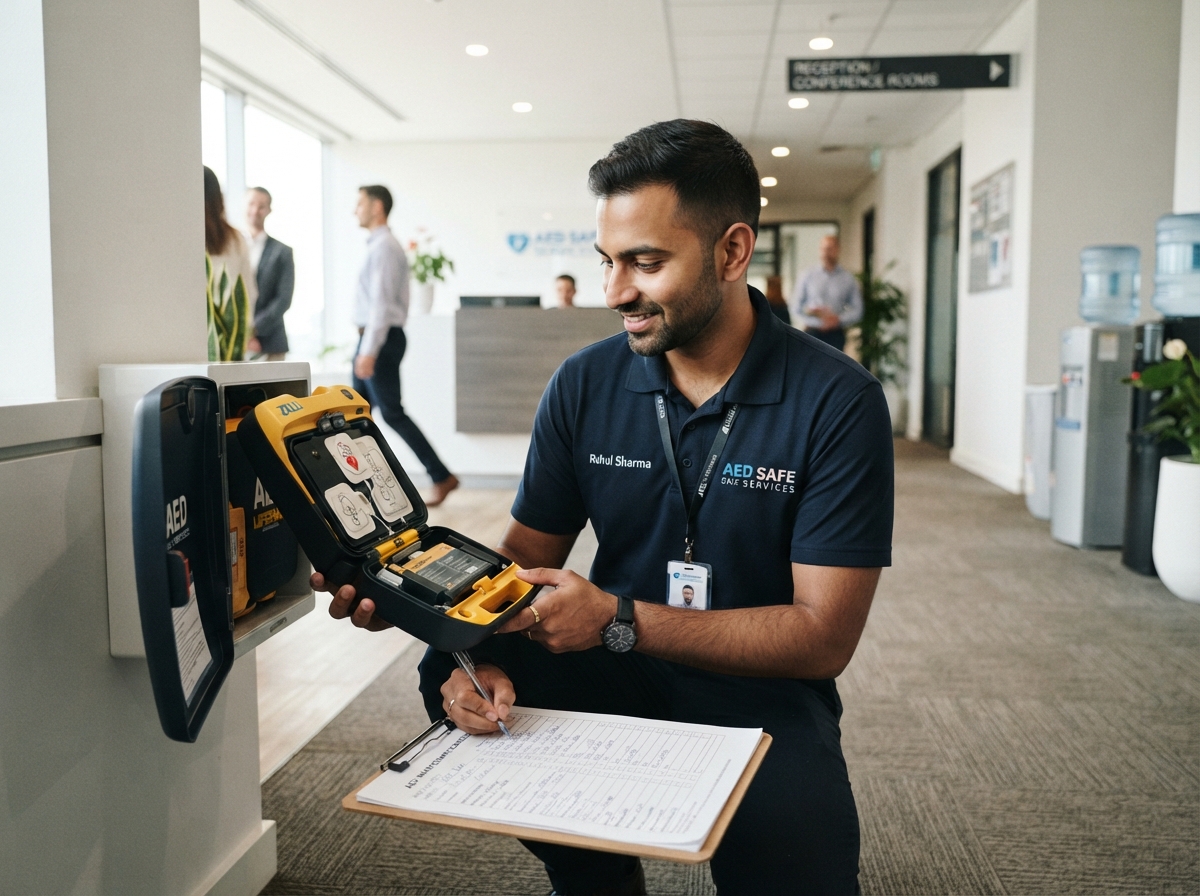
It's easy to walk past an AED cabinet dozens of times without ever glancing at the small status indicator light on the device. That light, however, is one of the simplest and most important safety signals your organization has.
What the Indicator Is Actually Telling You
Most AEDs display a simple green or red status — green (or a checkmark) generally means the device has passed its automatic self-test and is ready; red or a warning symbol means something needs attention, often a low or expired battery.
Self-Tests Happen Automatically
Modern AEDs run periodic internal self-tests without any action needed from staff. The indicator light is simply the visible result of that ongoing background check — ignoring it means ignoring the device's own warning system.
A Red Light Doesn't Always Mean "Broken"
A warning indicator often simply means the battery needs replacing, not that the unit itself has failed — but treating any warning status as urgent, rather than assuming it will resolve itself, is the safer habit to build.
Building a Habit Around It
The most reliable organizations build indicator checks into an existing routine — a Monday morning walk-through, a monthly safety check, or a responsibility assigned to a specific role — rather than relying on someone noticing it by chance.
What to Do If You See a Warning
Don't wait for the next scheduled maintenance visit. Contact us directly and we can typically resolve battery or pad issues quickly, minimizing the time your device is out of service.
Never Wonder Again
A structured Maintenance plan means someone is always tracking this for you, so a missed indicator light never becomes a real emergency gap.
Never Miss a Warning Light Again
Heart First Response supplies, installs, maintains and trains organizations on AEDs across Dubai, United Arab Emirates and the wider Gulf region. Call us on +971 52 1746500 or visit heartfirstaed.com to get started.