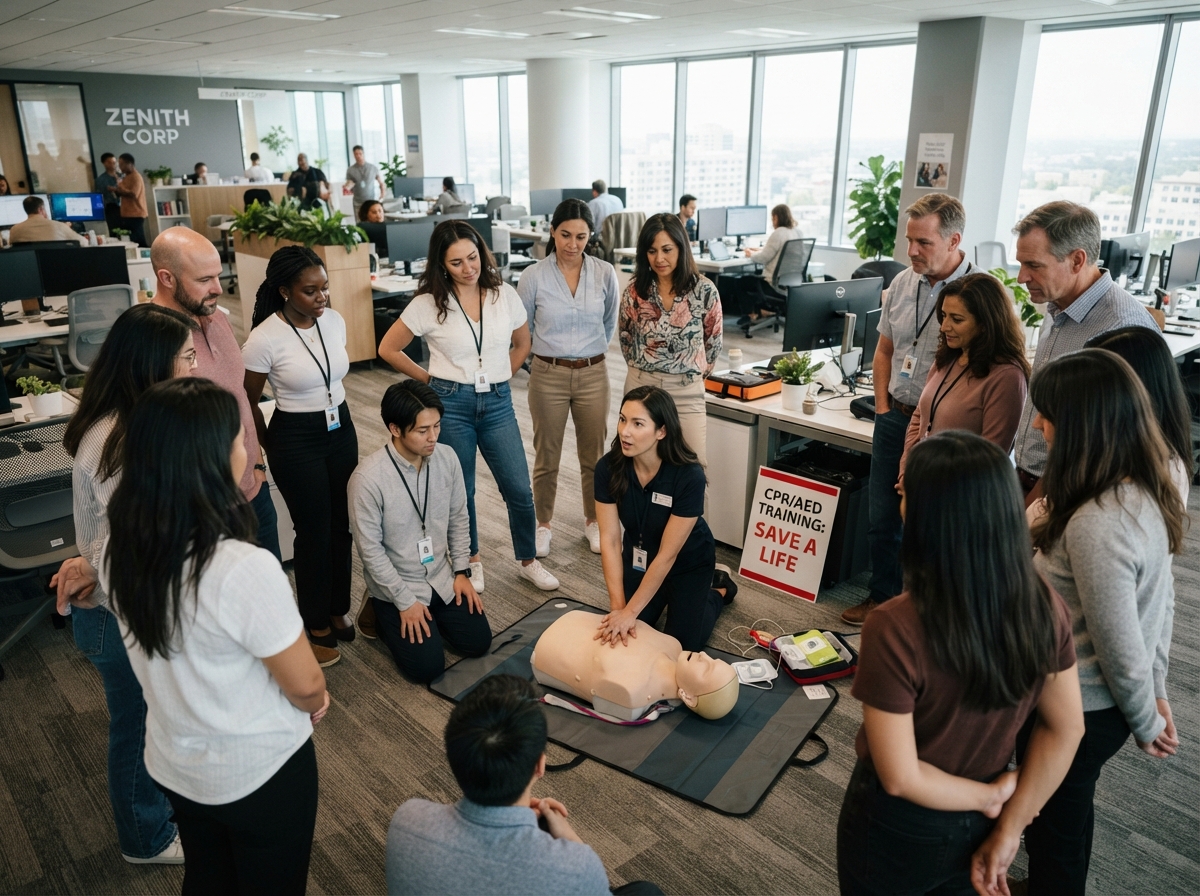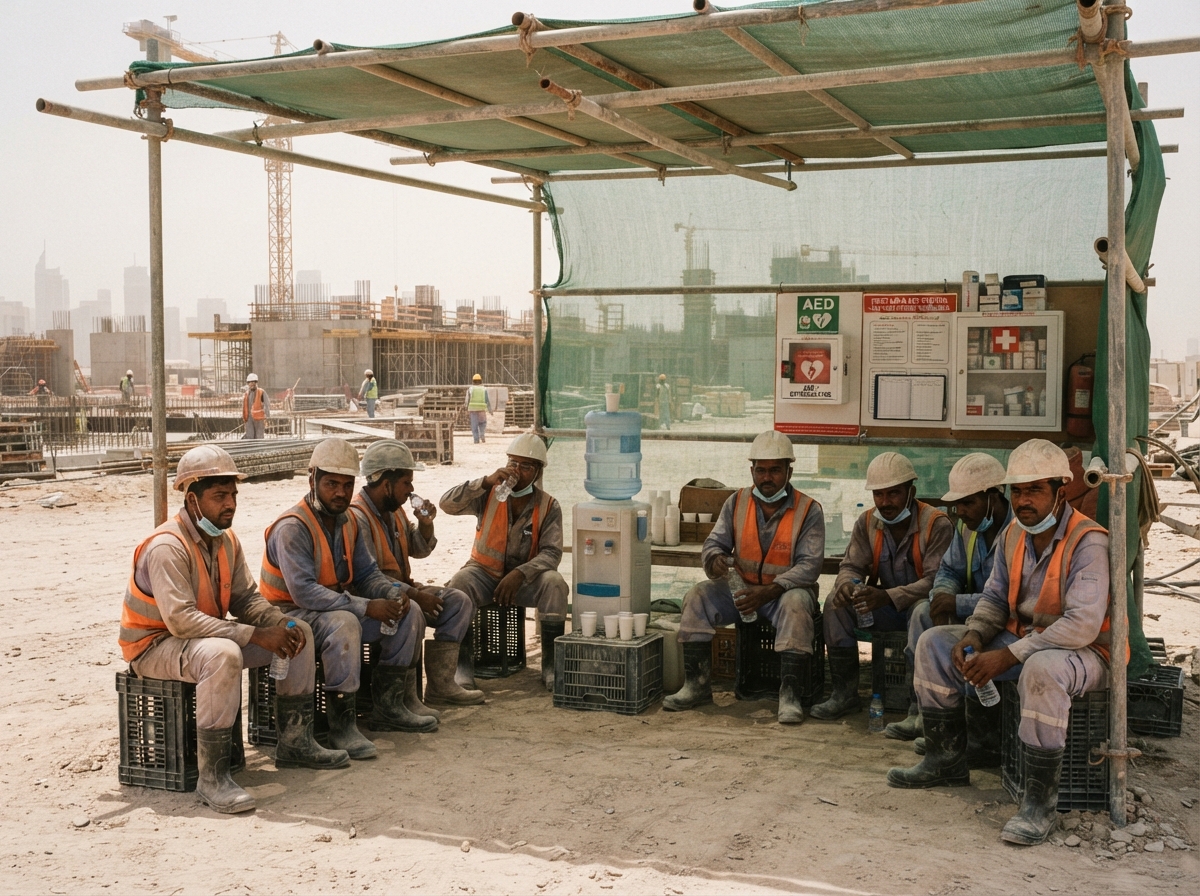
Many workplaces designate one or two staff members as "the first aid people" and consider the box checked. In reality, cardiac emergencies don't check the schedule to see who's on shift — which is exactly why baseline CPR and AED knowledge should extend well beyond a small designated group.
Designated Responders Aren't Always Available
Your trained first-aider could be on leave, in a meeting on another floor, or simply not the closest person when an emergency happens. A wider base of confident staff dramatically improves the odds someone capable is nearby.
Confidence Reduces Hesitation
The single biggest barrier to bystander action isn't lack of information — it's hesitation born from uncertainty. Even basic exposure to CPR and AED use meaningfully reduces that freeze response when a real emergency happens.
It Doesn't Require Everyone to Be an Expert
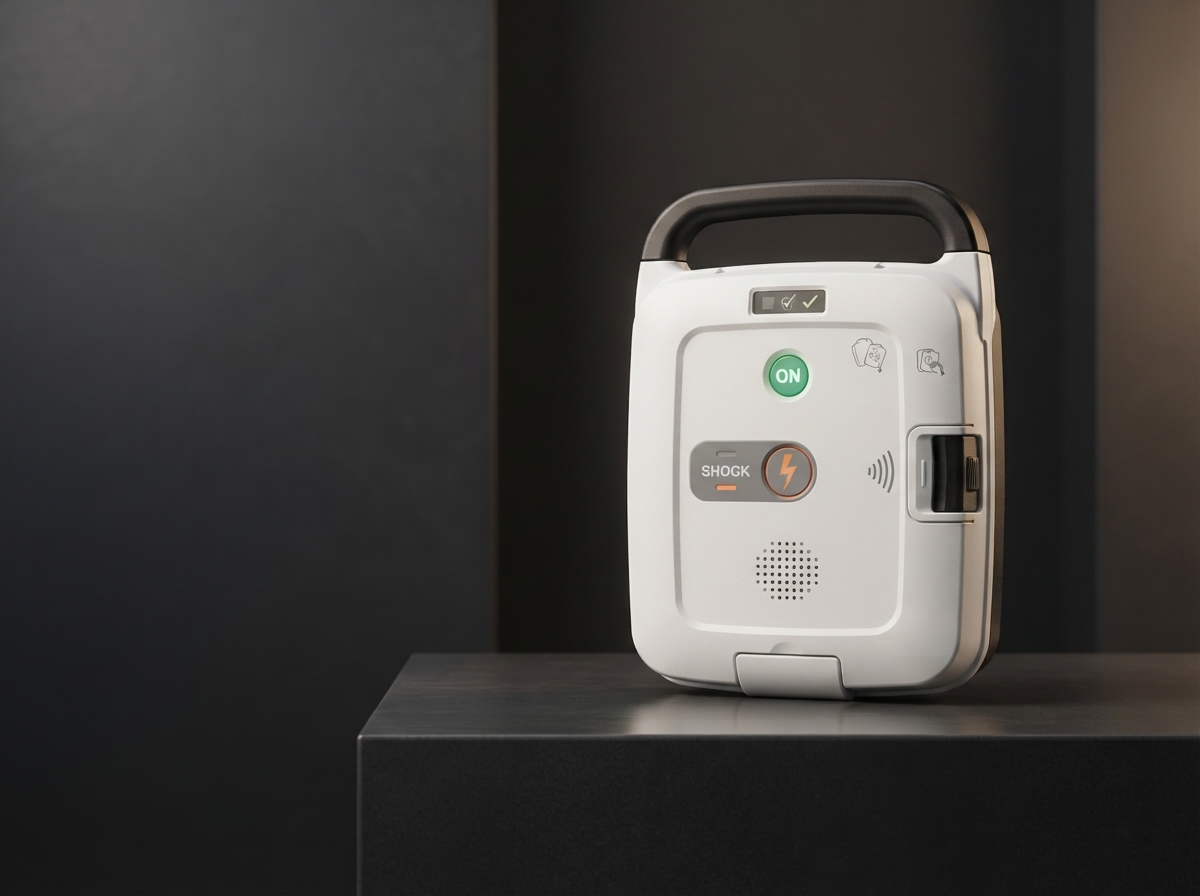
Baseline awareness — recognizing the signs of cardiac arrest, knowing where the nearest AED is, and understanding the basic compression rhythm — is achievable for an entire staff base without turning every employee into a certified responder.
A Culture of Readiness
Organizations that treat emergency readiness as a shared responsibility, not a specialist task, consistently respond faster and with more confidence when something actually happens.
Building This Into Onboarding
The most effective programs introduce basic CPR and AED awareness during new employee onboarding, rather than as a rarely-attended optional session months later.
Start With Your Whole Team
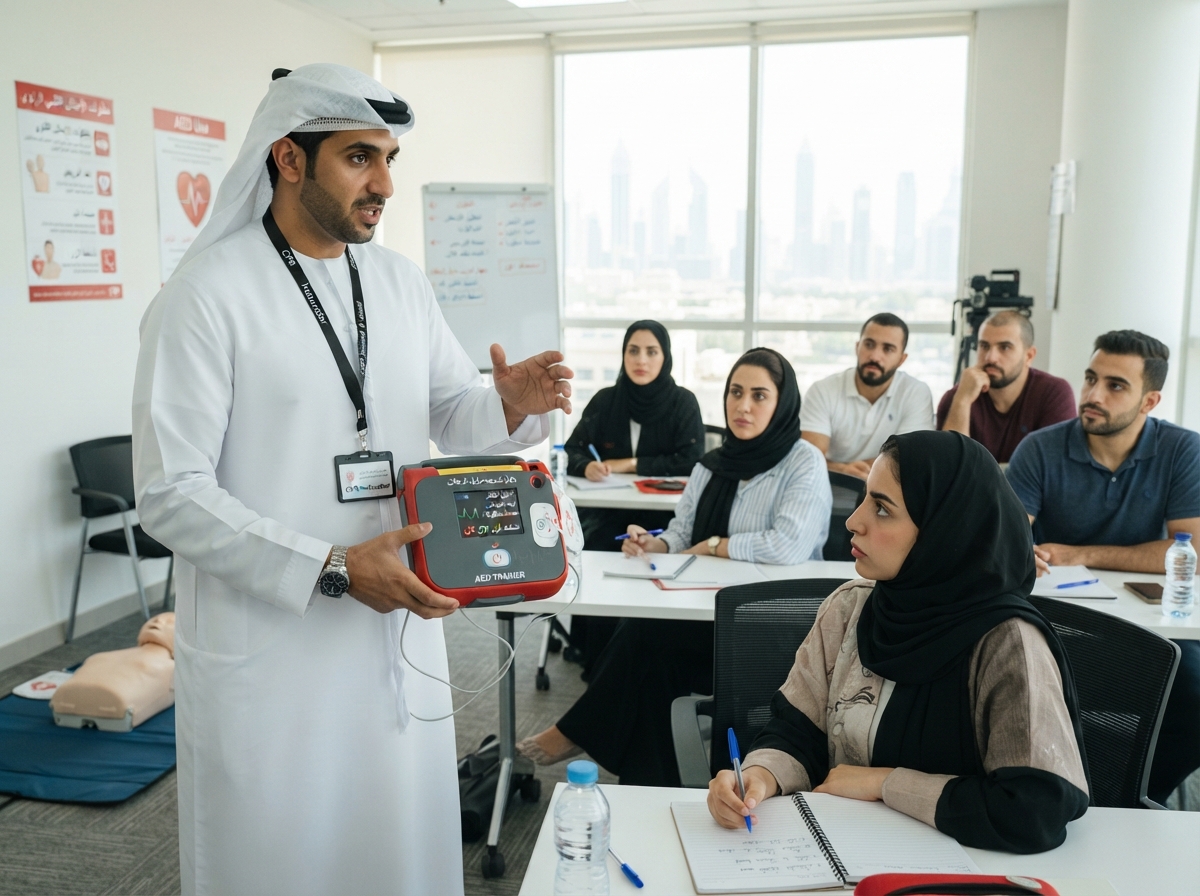
Our AED Training sessions are designed to scale across entire departments, not just a small first-aid committee — get in touch to plan a session for your organization.
Train Your Whole Team, Not Just a Few
Heart First Response supplies, installs, maintains and trains organizations on AEDs across Dubai, United Arab Emirates and the wider Gulf region. Call us on +971 52 1746500 or visit heartfirstaed.com to get started.